
TEXT 3
Sustainable mining – oxymoron or a way of the future?
Mining is an activity that has persisted since the start of humans
using tools. However, one might argue that digging a big hole in
the ground and selling the finite resources that come out of that
hole is not sustainable, especially when the digging involves the
use of other finite resources (i.e. fuels) and produces a lot of
greenhouse gases.
The counter argument could go along the lines that minerals are
not being lost or destroyed through mining and mineral
processing – the elements are being shifted around, and
converted into new forms. Metals can even be extracted from
waste, seawater or even sewage, and recycled. But a more simple
argument is possible: a mine can be sustainable if it is
economically, socially and environmentally beneficial in the short
and long term. To be sustainable, the positive benefits of mining
should outweigh any negative impacts. […]
Social positives are often associated with mines in regional areas,
such as providing better amenities in a nearby town, or providing
employment (an economic and social positive). Social negatives
can also occur, such as dust, noise, traffic and visual amenity.
These are commonly debated and, whilst sometimes
controversial, can be managed with sufficient corporate
commitment, stakeholder engagement, and enough time to work
through the issues. Time is the key parameter - it may take
several years for a respectful process of community input, but as
long as it is possible for social negatives to be outweighed by
social positives, then the project will be socially sustainable.
It is most likely that a mine development will have some
environmental negatives, such as direct impacts on flora and
fauna through clearing of vegetation and habitat within the mine
footprint. Some mines will have impacts which extend beyond
the mine site, such as disruption to groundwater, production of
silt and disposal of waste. Certainly these impacts will need to be
managed throughout the mine life, along with robust
rehabilitation and closure planning. […]
The real turning point will come when mining companies go
beyond environmental compliance to create 'heritage projects'
that can enhance the environmental or social benefits in a
substantial way – by more than the environmental offsets
needed just to make up for the negatives created by the mine. In
order to foster these innovative mining heritage projects we need
to promote 'sustainability assessments' - not just 'environmental
assessments'. This will lead to a more mature appreciation of the
whole system whereby the economic and social factors, as well as
environmental factors, are considered in a holistic manner.
(adapted from https://www.engineersaustralia.org.au/westernaustralia-division/sustainable-mining-oxymoron-or-way-future.
Retrieved on August 10, 2015)
When Text 3 informs that elements can be “shifted around” (l.9), it means they can be:
Determinado agente público municipal, em fiscalização de rotina, pratica ato administrativo discricionário, dentro de sua esfera de competência, mas afastando-se do interesse público, eis que a real motivação do ato foi retaliar antigo desafeto. No caso em tela, de acordo com o que ensina a doutrina de Direito Administrativo, o agente público agiu com:
De acordo com a doutrina de Direito Administrativo, os bens de uso especial são aqueles que:
O Vereador Eudésio, logo após tomar posse no cargo, decidiu estudar as competências municipais para melhor exercer as suas funções. Considerando a sistemática adotada pela Constituição da República Federativa do Brasil, é correto afirmar que o Município pode:
Na seção de atendimento ao público de certa secretaria municipal, os documentos de cada pessoa atendida são colocados em uma pasta. A partir do primeiro dia útil de 2015 as pastas foram numeradas, na ordem do atendimento, com os símbolos: P-01, P-02, P-03, etc. e essas pastas foram guardadas em caixas numeradas com os símbolos C-01, C-02, C-03, etc. Cada caixa contém 15 pastas, de forma que as pastas de P-01 a P- 15 estão na caixa C-01, as pastas de P-16 a P-30 estão na caixa C- 02, e assim por diante. A pasta P-1000 está na caixa:
Uma máquina é capaz de imprimir e encadernar cada exemplar de um determinado livro em 2min45s. Trabalhando continuamente, o tempo que essa máquina levará para imprimir e encadernar 100 livros é:
O quadro a seguir mostra a distribuição das idades dos
funcionários de certa repartição pública
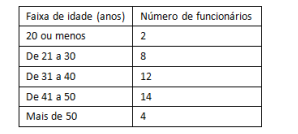
Escolhendo ao acaso um desses funcionários, a probabilidade de
que ele tenha mais de 40 anos é:
O Google permite o emprego de expressões que refinam o
processo de busca. Analise, na figura abaixo, a primeira parte do
resultado de uma busca realizada pelo Google.
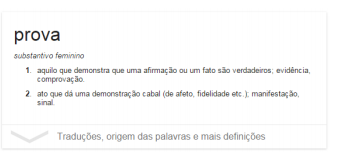
Nesse caso, o texto digitado na caixa de busca foi:
A concessão de medida liminar em mandado de segurança que ataca o lançamento tributário é causa de:
João, 75 anos, proprietário de imóvel, recebeu uma carta da
municipalidade com a comunicação de que, mesmo tendo
ocorrido o fato gerador do IPTU, não haveria necessidade de
realização do pagamento, uma vez que fora aprovada no ano
anterior uma lei que isentava os moradores com idade acima de
70 anos. Nesse caso, a lei estabeleceu uma:
A lei tributária será aplicada a fatos que venham a ocorrer após sua vacatio legis, se houver, e também a fato pretérito quando:
Uma vez regularmente notificado ao sujeito passivo, o
lançamento só pode ser alterado em virtude de:
Determinado contribuinte do IPTU não pagou o tributo relativo
ao seu único imóvel residencial nos últimos quatro anos e vem a
sofrer a execução fiscal para cobrança do imposto. Nesse caso:
Os atos administrativos emanam de agentes dotados de parcela do poder público e estão revestidos de certas características que os distinguem dos atos privados em geral, a fim de que possam alcançar a finalidade que atenda ao interesse público. Dentre tais características ou atributos, destaca-se a autoexecutoriedade, segundo a qual o ato administrativo:
Em matéria de classificação de bens públicos, quanto à destinação, de acordo com a doutrina de Direito Administrativo e com o disposto no Código Civil, os edifícios destinados a serviço ou estabelecimento da administração municipal são bens públicos: