
Choose the meaning of the verb HAD on the following sentence:
The teacher had her class write na essay.
Choose the correct formo f the verb to fi the sentence.
Don’t forget __________ your homework.

Indique qual é o nome do método historiográfico de Michel Foucault:
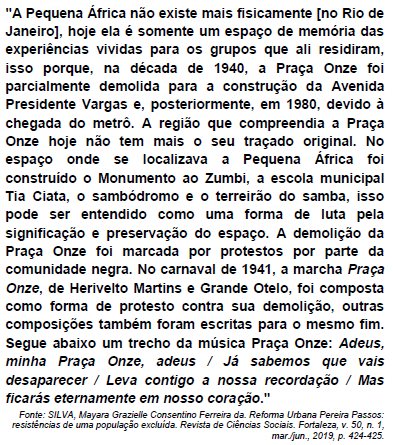
Sobre a vida cotidiana e os processos de urbanização no Brasil República é incorreto afirmar:
Bioma, de acordo com o IBGE, pode ser definido como o conjunto de vida vegetal e animal presentes em um ambiente que possui condições naturais (clima, relevo, características geológicas) parecidas e que historicamente foi influenciado pelo mesmo processo de formação. É comum vermos em livros e materiais didáticos a adoção do conceito de bioma como sendo sinônimo de ecossistema. Contudo, diferentemente do ecossistema, que leva em consideração as interações entre os seus elementos, a classificação de bioma engloba essencialmente as características da vegetação, da fauna e do ambiente em que estão inseridas. Os principais biomas do mundo são:
Em razão de fatores como vastidão territorial e características morfológicas, o Brasil tem um dos maiores complexos hidrográficos do mundo. São características da hidrografia brasileira:
- Os regimes dos rios brasileiros são de predominância do tipo pluvial, isso quer dizer que os períodos de cheias e vazantes são determinados pela ocorrência de chuvas e secas, influência direta do clima na hidrografia.
- Predomínio de foz do tipo estuário, desembocando no mar em forma de um único canal.
- Superioridade de rios que deságuam no mar, nascem no interior do país e percorrem em direção ao oceano, chamado de drenagem do tipo endorréica.
- Grande riqueza fluvial, tanto na quantidade quanto na extensão e no volume de água.
Estão corretos:
Com base em seus conhecimentos sobre fusos horários, assinale a alternativa INCORRETA:
A eutrofização é um fenômeno que pode ocorrer por causas naturais, entretanto, esse fenômeno pode ser acentuado:
Leis de Newton é uma expressão designada às três leis que possibilitam e constituem a base primária para compreensão dos comportamentos estático e dinâmico dos corpos materiais, formuladas pelo físico inglês Isaac Newton ainda no século XVII. Qual alternativa NÃO faz parte das três leis de Newton?
O Folclore brasileiro é considerado um patrimônio cultural imaterial pela Unesco, o termo tem origem no inglês, e ele significa:
E em relação ao âmbito da música, NÃO está estre essas habilidades:
Text 1:
How being bilingual can boost your career
Whether you’re fresh out of college or a seasoned executive, insiders agree that fluency in a second language can not only help you stand out among prospective employers, it can also open doors to opportunities that those without foreign language skills might miss.
In today’s global economy, the ability to communicate in another language has become a significant advantage in the workforce. Research has found that people who speak at least one foreign language have an average annual household income that’s $10,000 higher than the household income of those who only speak English. And about 17 percent of those who speak at least one foreign language earn more than $100,000 a year.
A recent survey found that nearly 9 out of 10 headhunters in Europe, Latin America, and Asia say that being at least bilingual is critical for success in today’s business environment. And 66 percent of North American recruiters agreed that being bilingual will be increasingly important in the next 10 years.
“In today’s global economy you really have to understand the way business is done overseas to maximize your potential. A second language equips you for that,” says Alister Wellesley, managing partner of a Connecticut-based recruiting firm. “If you’re doing business overseas, or with someone from overseas, you obtain a certain degree of respect if you’re able to talk in their native language.”
Language skills can also be key for service industries. At the Willard InterContinental Washington, a luxury hotel a few blocks from the White House, a staff of about 570 represents 42 nations, speaking 19 languages. The Willard’s front-of-house employees such as the concierge speak at least two languages. Bilingualism is not an absolute requirement, but it is desirable, according to Wendi Colby, director of human resources.
Workers with skills in a second language may have an edge when it comes to climbing Willard’s professional ladder. “The individual that spoke more languages would have a better chance for a managerial role, whatever the next
level would be,” Colby says. “They are able to deal with a wide array of clients, employees.”
So which languages can give you a leg up on the job market? Insiders agree the most popular – and marketable – languages are Spanish, German, French, Italian, Russian and Japanese, with a growing emphasis on Mandarin, given China’s booming economy. So let’s learn Mandarin!
“We see demand from a full range of industries,” says Wellesley. “Actually it depends on which company you’re working for and the country in which they’re located.”
Adapted from: LATHAM-KOENIG, Christina & OXENDEN,
Clive. American English File 5. 2nd edition. Oxford: OUP,
2018.
Choose the expression taken from the text that CANNOT be considered a nominal group.
Text 1:
How being bilingual can boost your career
Whether you’re fresh out of college or a seasoned executive, insiders agree that fluency in a second language can not only help you stand out among prospective employers, it can also open doors to opportunities that those without foreign language skills might miss.
In today’s global economy, the ability to communicate in another language has become a significant advantage in the workforce. Research has found that people who speak at least one foreign language have an average annual household income that’s $10,000 higher than the household income of those who only speak English. And about 17 percent of those who speak at least one foreign language earn more than $100,000 a year.
A recent survey found that nearly 9 out of 10 headhunters in Europe, Latin America, and Asia say that being at least bilingual is critical for success in today’s business environment. And 66 percent of North American recruiters agreed that being bilingual will be increasingly important in the next 10 years.
“In today’s global economy you really have to understand the way business is done overseas to maximize your potential. A second language equips you for that,” says Alister Wellesley, managing partner of a Connecticut-based recruiting firm. “If you’re doing business overseas, or with someone from overseas, you obtain a certain degree of respect if you’re able to talk in their native language.”
Language skills can also be key for service industries. At the Willard InterContinental Washington, a luxury hotel a few blocks from the White House, a staff of about 570 represents 42 nations, speaking 19 languages. The Willard’s front-of-house employees such as the concierge speak at least two languages. Bilingualism is not an absolute requirement, but it is desirable, according to Wendi Colby, director of human resources.
Workers with skills in a second language may have an edge when it comes to climbing Willard’s professional ladder. “The individual that spoke more languages would have a better chance for a managerial role, whatever the next level would be,” Colby says. “They are able to deal with a wide array of clients, employees.”
So which languages can give you a leg up on the job market? Insiders agree the most popular – and marketable – languages are Spanish, German, French, Italian, Russian and Japanese, with a growing emphasis on Mandarin, given China’s booming economy. So let’s learn Mandarin!
“We see demand from a full range of industries,” says Wellesley. “Actually it depends on which company you’re working for and the country in which they’re located.”
The sentence “Bilingualism is not an absolute requirement, but it is desirable” could be rewritten, with no change in meaning, as:
Text 1:
How being bilingual can boost your career
Whether you’re fresh out of college or a seasoned executive, insiders agree that fluency in a second language can not only help you stand out among prospective employers, it can also open doors to opportunities that those without foreign language skills might miss.
In today’s global economy, the ability to communicate in another language has become a significant advantage in the workforce. Research has found that people who speak at least one foreign language have an average annual household income that’s $10,000 higher than the household income of those who only speak English. And about 17 percent of those who speak at least one foreign language earn more than $100,000 a year.
A recent survey found that nearly 9 out of 10 headhunters in Europe, Latin America, and Asia say that being at least bilingual is critical for success in today’s business environment. And 66 percent of North American recruiters agreed that being bilingual will be increasingly important in the next 10 years.
“In today’s global economy you really have to understand the way business is done overseas to maximize your potential. A second language equips you for that,” says Alister Wellesley, managing partner of a Connecticut-based recruiting firm. “If you’re doing business overseas, or with someone from overseas, you obtain a certain degree of respect if you’re able to talk in their native language.”
Language skills can also be key for service industries. At the Willard InterContinental Washington, a luxury hotel a few blocks from the White House, a staff of about 570 represents 42 nations, speaking 19 languages. The Willard’s front-of-house employees such as the concierge speak at least two languages. Bilingualism is not an absolute requirement, but it is desirable, according to Wendi Colby, director of human resources.
Workers with skills in a second language may have an edge when it comes to climbing Willard’s professional ladder. “The individual that spoke more languages would have a better chance for a managerial role, whatever the next level would be,” Colby says. “They are able to deal with a wide array of clients, employees.”
So which languages can give you a leg up on the job market? Insiders agree the most popular – and marketable – languages are Spanish, German, French, Italian, Russian and Japanese, with a growing emphasis on Mandarin, given China’s booming economy. So let’s learn Mandarin!
“We see demand from a full range of industries,” says Wellesley. “Actually it depends on which company you’re working for and the country in which they’re located.”
Adapted from: LATHAM-KOENIG, Christina & OXENDEN, Clive. American English File 5. 2nd edition. Oxford: OUP, 2018.
Wendy told John, one of her coworkers: “Don’t be late!”
Choose, among the options below, the correct sentence in reported speech:

According to text 2, teachers should give students advice.
Choose the only sentence below in which the noun ADVICE is used correctly.
A concordância verbal está de acordo com a gramática normativa em:
O departamento de recursos humanos de uma empresa recrutou 32 pessoas para uma vaga de emprego das quais 22 eram do sexo masculino e 27 tinham idade superior aos 25 anos, faixa etária que curiosamente contemplava todas os homens interessados na vaga. Qual a razão entre as mulheres menores que 25 anos e o total de mulheres?
Para tentar dar um incentivo para seu filho estudar matemática um pai fez a seguinte proposta:
Para cada questão que você acertar eu lhe darei R$1,00 e para cada questão que errar você me dará R$0,50.
Após responder 100 questões a criança viu que tinha ficado com R$ 10,00. Quantos problemas o menino respondeu corretamente ?
São fatores que podem interferir na condição nutricional da pessoa idosa, exceto:
Notificação compulsória imediata (NCI) é a notificação compulsória realizada em até 24 horas, a partir do conhecimento da ocorrência de doença, agravo ou evento de saúde pública, pelo meio de comunicação mais rápido disponível. Assinale a alternativa que não apresenta uma doença/agravo de notificação compulsória imediata:
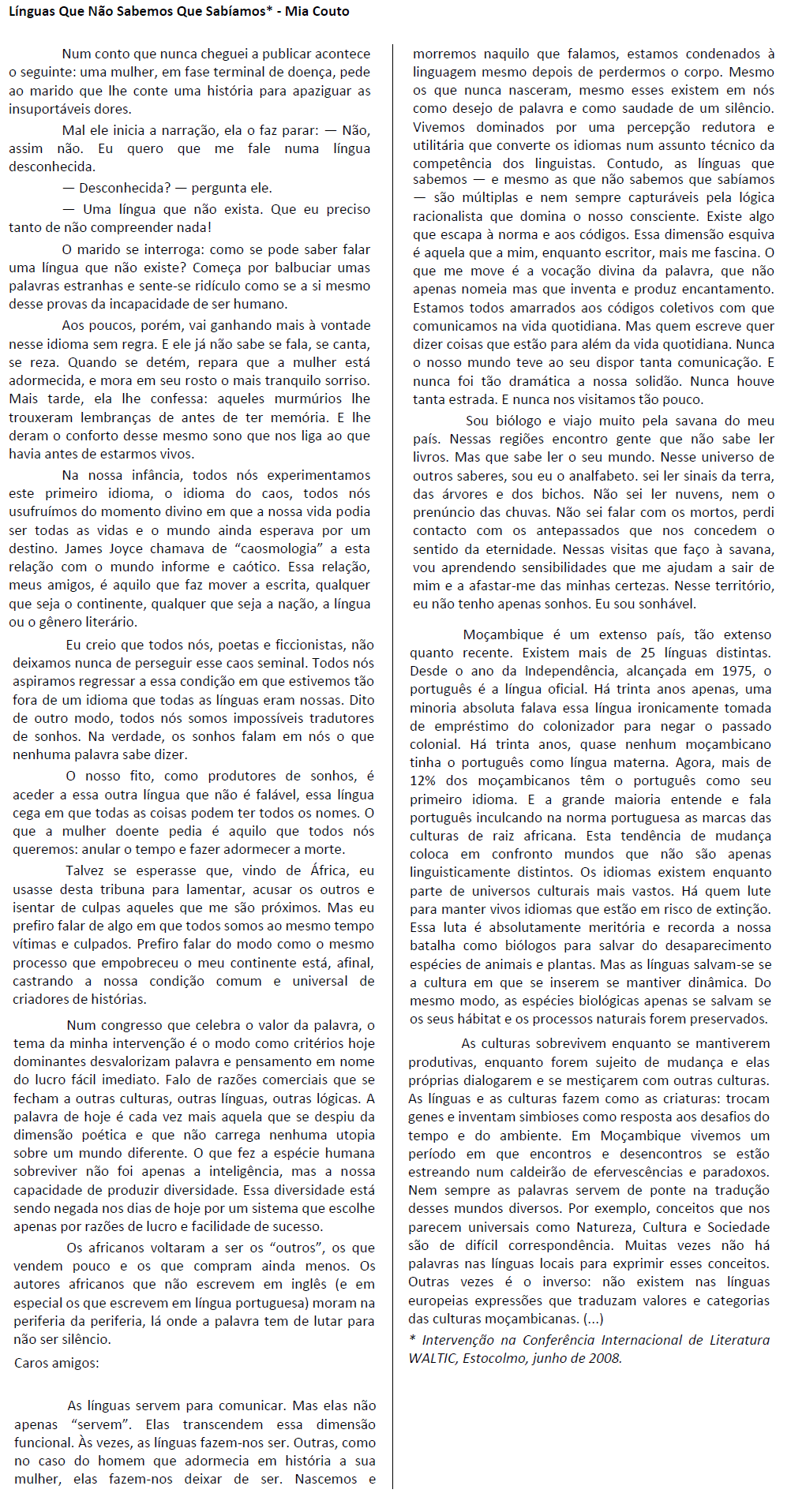
“Muitas vezes não há palavras nas línguas locais para exprimir esses conceitos.” Em relação ao verbo destacado é correto afirmar que:
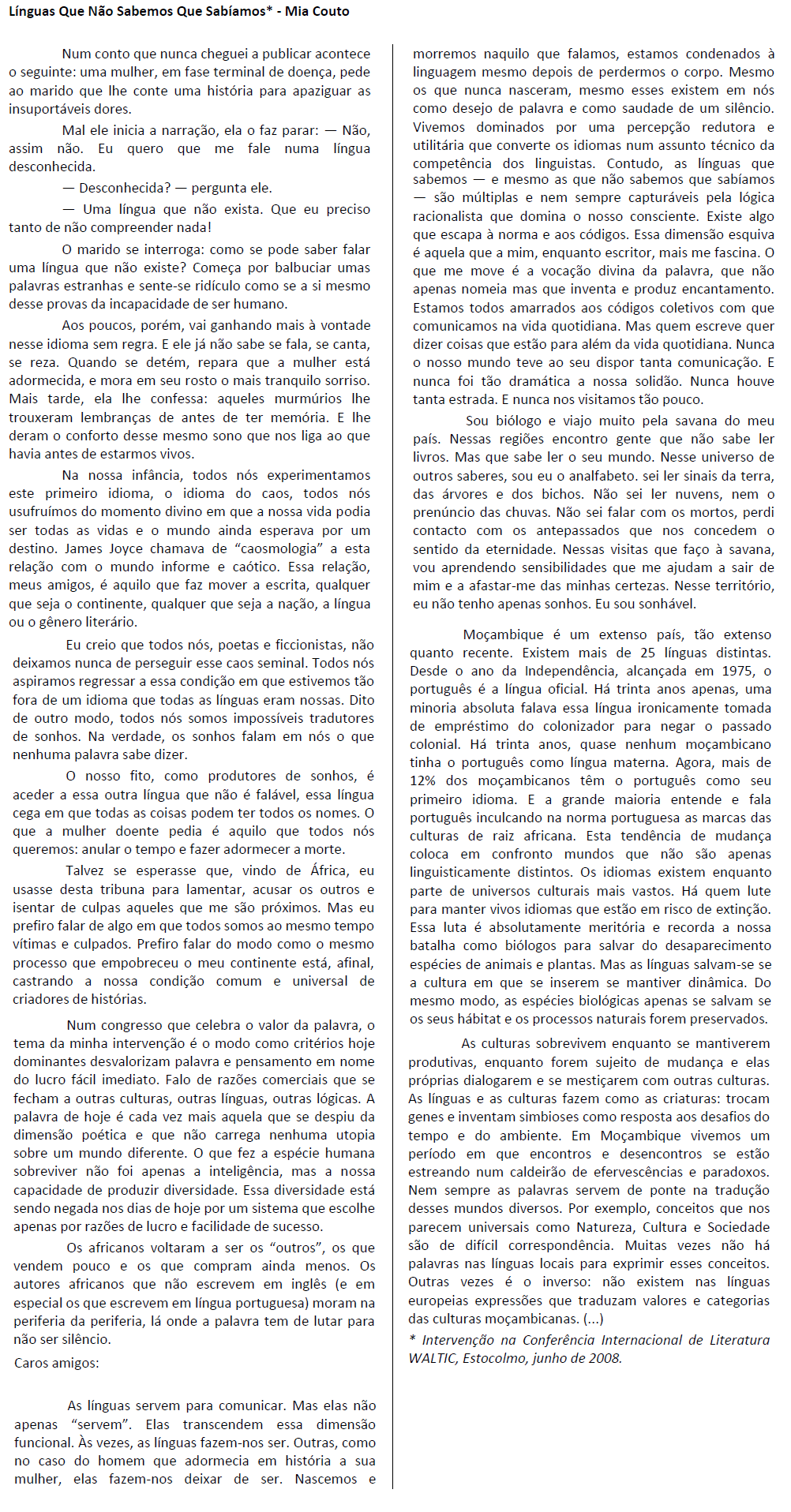
“Num congresso que celebra o valor da palavra, o tema da minha intervenção é o modo como critérios hoje dominantes desvalorizam palavra e pensamento em nome do lucro fácil imediato.” A concordância está correta em:
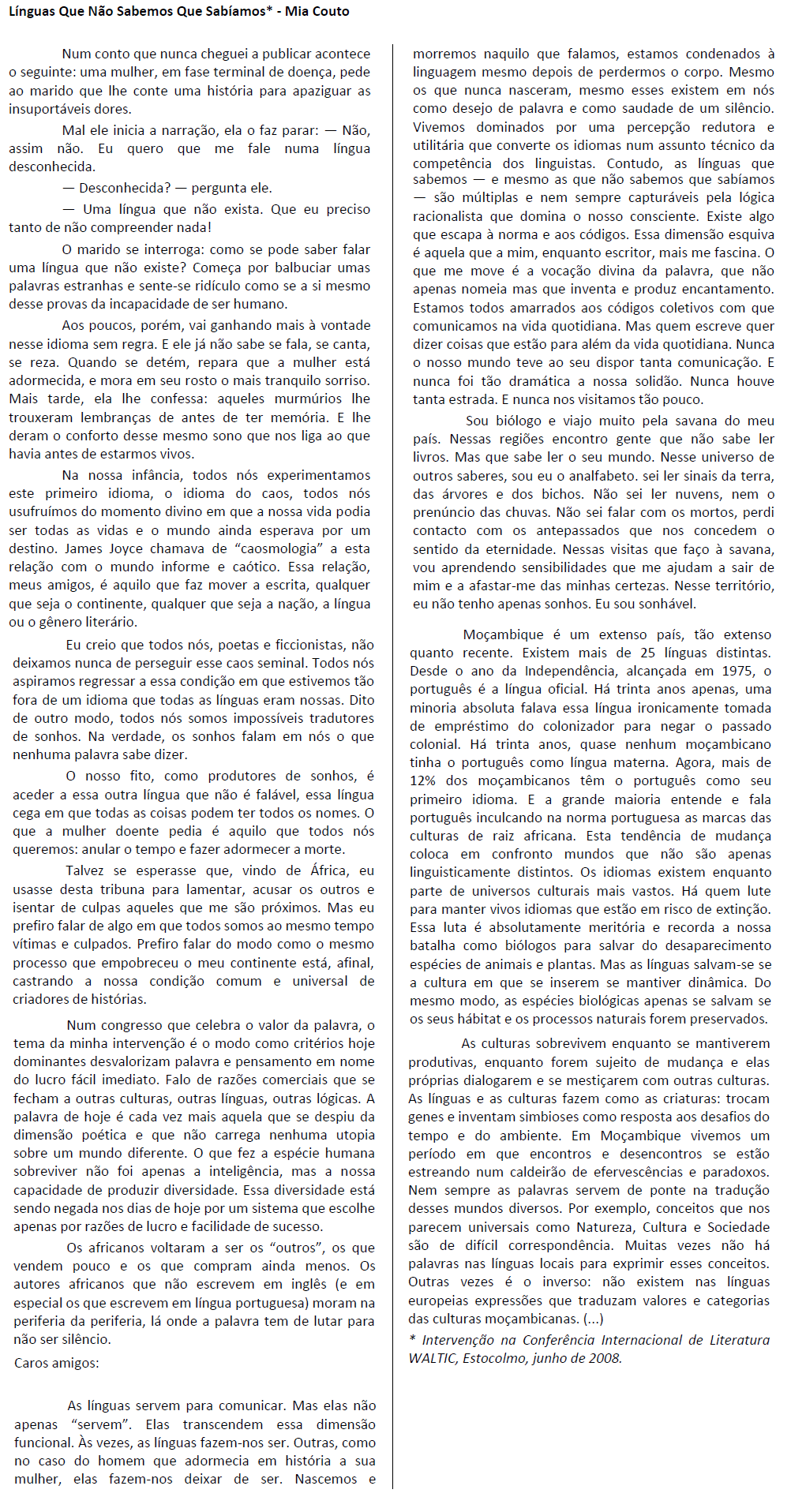
“Os autores africanos que não escrevem em inglês (e em especial os que escrevem em língua portuguesa) moram na periferia da periferia, lá onde a palavra tem de lutar para não ser silêncio.” Os parênteses foram usados para:
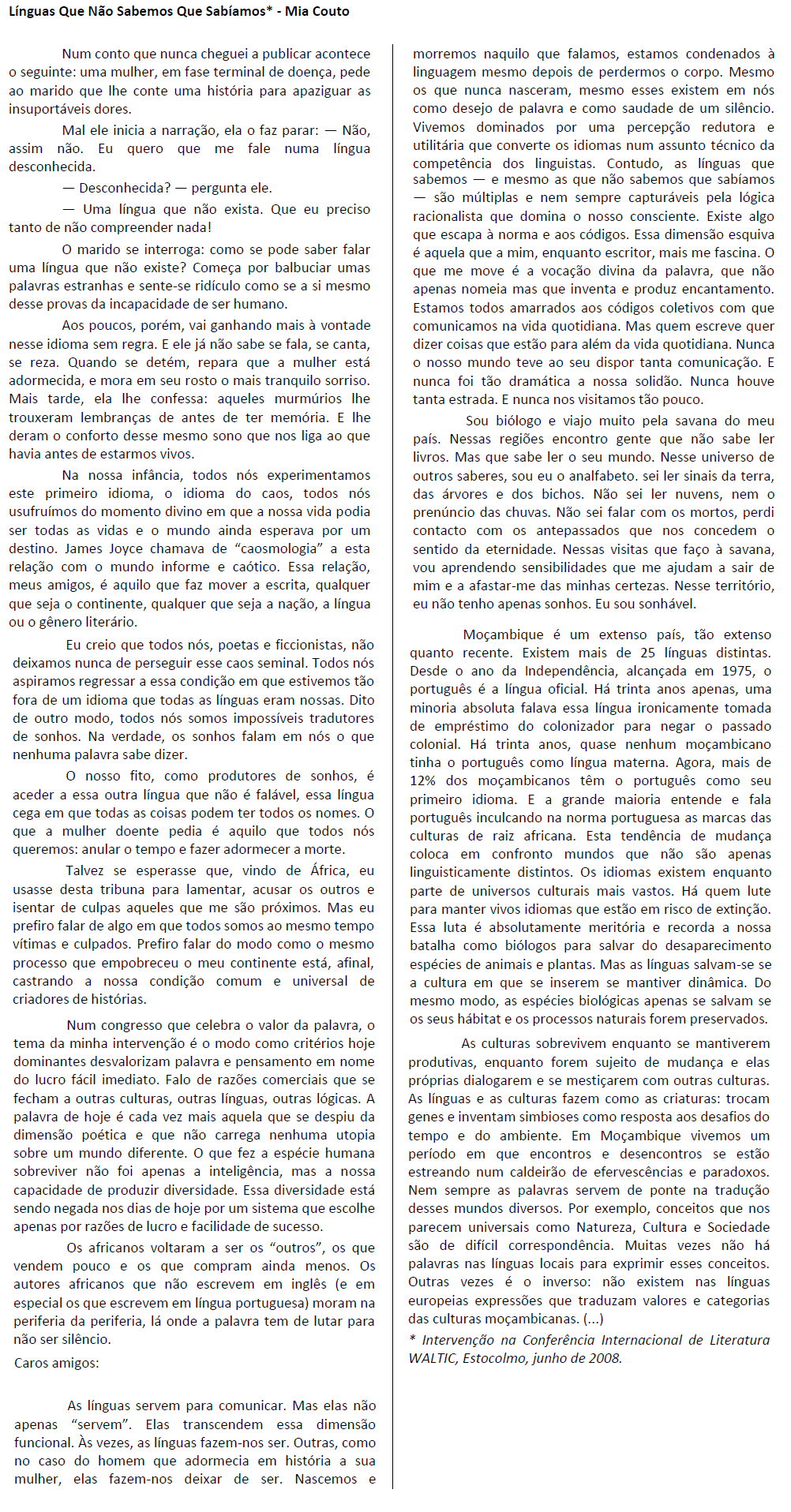
“Talvez se esperasse que, vindo de África, eu usasse desta tribuna para lamentar, acusar os outros e isentar de culpas aqueles que me são próximos.” A oração reduzida destacada estabelece uma relação com a anterior de:
Um quadrilátero ABCD possui fixos os vértices A(12,0), B(0,0) e D(16,8). O comprimento do lado BC permanece constante e igual a 4 unidades. Sabendo-se que o lugar geométrico (conjunto de pontos que seguem determinada regra) do ponto médio do segmento de reta que liga os pontos médios das diagonais AC e BD é uma circunferência, o par ordenado do centro desta circunferência, bem como o seu raio são, respectivamente:
Considere a matriz 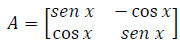 e as seguintes proposições:
I- Se Paris está na França então o determinante de A é igual a 0 (zero).
II- Se Paris está na Inglaterra então o determinante de A é igual a 1 (um).
III- Se Paris está na França, então o determinante de A é igual a 1 (um).
IV- Se Paris está na Inglaterra, então o determinante de A é igual a 0 (zero).
Então, entre as quatro proposições acima, o rol completo da(s) proposição(ões) correta(s) é:
Se o resultado de um teste de matemática para 1000 alunos segue uma distribuição normal com média 7 e desvio padrão 1, então o provável número de estudantes com nota acima de 8 é:
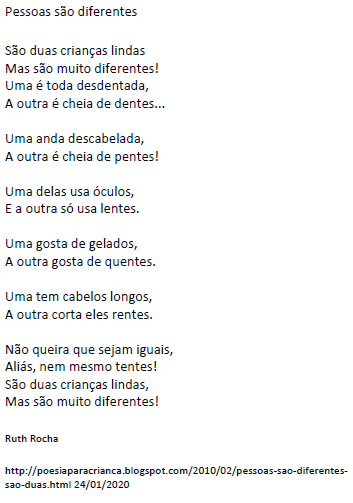
Em uma turma de 5º ano, ao ler o poema, surgiu a seguinte dúvida: por que as palavras ÓCULOS e SÓ têm acento? Um estudante respondeu que essas duas palavras são acentuadas porque o som da letra O - /Ó/ é o mesmo. A justificativa do estudante está:
Durante o mês de janeiro ocorrem muitas chuvas. Enchentes e desabamentos estão relacionados com fatores naturais e também com ações humanas.
Que fatores humanos contribuem para a ocorrência desses problemas?
Conflitos, em si, são neutros; suas manifestações construtivas ou destrutivas dependem da forma como lidamos com eles. Aprender a lidar com os conflitos como seres humanos autônomos, capazes de dialogar e encontrar estratégias que satisfaçam suas necessidades sem negligenciar as dos outros é uma parte importante do crescimento das crianças e dos jovens. Para tanto, os adultos da escola também precisam aprender a passar pelo mesmo processo.
As escolas voltadas para o compromisso com o desenvolvimento da cidadania, precisam compreender que a aprendizagem de conviver com o conflito deve: