
Uma bandeja contém nove empadas de mesmo tamanho e aparência, mas com recheios diferentes: quatro são de frango, três são de palmito e duas, de camarão. Uma pessoa retira, ao acaso, duas dessas empadas.
A probabilidade de que ambas sejam de palmito é igual a:
A figura abaixo mostra o triângulo ABC e um retângulo ADEF no seu interior tal que a medida da base AD é o dobro de sua altura DE.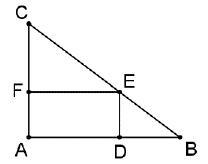
Sabe-se que AB = 8cm e AC = 6cm.
O perímetro do retângulo ADEF é:
Considere que uma dívida no cartão de crédito aumente 100% ao ano. Imagine que a dívida inicial seja de R$1.000,00.
Ao final de 5 anos, a dívida será de:
Read Text I and answer the five questions that follow it
Text I
Impact of Climate Change on Firefighting Extends Beyond Wildfires
Global warming is often mentioned as a factor in the accelerating frequency and intensity of wildfires. However, there are other consequences of global warming that impact the fire service, including new hazards and medical emergencies, emerging training challenges, population migration, and technology developments.
Climate change is often discussed as a future event. However, the impact of wildfires is just the most obvious example of how climate change is already impacting the world, and fire and emergency personnel will be called on to mitigate the effects.
The most obvious and extreme impact of global warming can be seen in the increase of frequency and intensity of wildfires. Hotter and drier weather is extending the wildfire season (maybe to become year-round?). Higher temperatures, low humidity, less rainfall, and high wind increase the likelihood of wildfires.
Adapted from: https://www.thebigredguide.com/insights/impact-climate-change-firefighting-extends-wildfires-editor-s-dispatch.1645685564.html
The opposite of “often” in “Climate change is often discussed” (2nd paragraph) is:
Dora é responsável pelo controle do estoque do escritório em que trabalha. No estoque do escritório constavam, em 1 de
junho, 50 unidades de determinado insumo ao preço unitário de R$20,00. No dia 12 de junho, Dora registrou que entraram no estoque mais 100 unidades do insumo, ao preço de R$25,00 por unidade. Em 25 de junho, foi registrada a saída de 60 unidades do insumo, não havendo mais entradas ou saídas do insumo do estoque no mês.
Na situação descrita, em 30 de junho, o valor do saldo do estoque do insumo, com base no método PEPS (primeiro a entrar,
primeiro a sair), era de: