
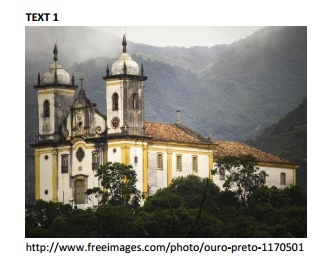
Mining tourism in Ouro Preto
Ouro Preto is surrounded by a rich and varied natural
environment with waterfalls, hiking trails and native vegetation
partially protected as state parks. Parts of these resources are
used for tourism. Paradoxically, this ecosystem contrasts with the
human occupation of the region that produced, after centuries, a
rich history and a cultural connection to mining, its oldest
economic activity which triggered occupation. The region has an
unlimited potential for tourism, especially in specific segments
such as mining heritage tourism, in association or not with the
existing ecotourism market. In fact, in Ouro Preto, tourism,
history, geology and mining are often hard to distinguish; such is
the inter-relationship between these segments.
For centuries, a major problem of mining has been the reuse of
the affected areas. Modern mining projects proposed solutions to
this problem right from the initial stages of operation, which did
not happen until recently. As a result, most quarries and other
old mining areas that do not have an appropriate destination
represent serious environmental problems. Mining tourism
utilizing exhausted mines is a source of employment and income.
Tourism activities may even contribute to the recovery of
degraded areas in various ways, such as reforestation for leisure
purposes, or their transformation into history museums where
aspects of local mining are interpreted.
Minas Gerais, and particularly Ouro Preto, provides the strong
and rich cultural and historical content needed for the
transformation of mining remnants into attractive tourism
products, especially when combined with the existing cultural
tourism of the region. Although mining tourism is explored in
various parts of the world in extremely different social, economic,
cultural and natural contexts, in Brazil it is still not a strategy
readily adopted as an alternative for areas affected by mining
activities.
(Lohmann, G. M.; Flecha, A. C.; Knupp, M. E. C. G.; Liccardo, A.
(2011). Mining tourism in Ouro Preto, Brazil: opportunities and
challenges. In: M. V. Conlin; L. Jolliffe (eds). Mining heritage and
tourism: a global synthesis. New York: Routledge, pp. 194-202.)
Mark the statements below as TRUE (T ) or FALSE ( F) according to Text 1. ( ) Tourism may actually be quite beneficial to some degraded mining areas. ( ) Mining tourism has recently been promptly embraced by Brazilian regions. ( ) Ouro Preto is attracting people because mining is one of its most recent activities. The correct sequence is:
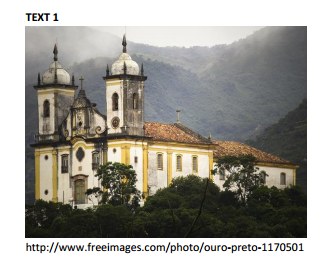
Mining tourism in Ouro Preto
Ouro Preto is surrounded by a rich and varied natural
environment with waterfalls, hiking trails and native vegetation
partially protected as state parks. Parts of these resources are
used for tourism. Paradoxically, this ecosystem contrasts with the
human occupation of the region that produced, after centuries, a
rich history and a cultural connection to mining, its oldest
economic activity which triggered occupation. The region has an
unlimited potential for tourism, especially in specific segments
such as mining heritage tourism, in association or not with the
existing ecotourism market. In fact, in Ouro Preto, tourism,
history, geology and mining are often hard to distinguish; such is
the inter-relationship between these segments.
For centuries, a major problem of mining has been the reuse of
the affected areas. Modern mining projects proposed solutions to
this problem right from the initial stages of operation, which did
not happen until recently. As a result, most quarries and other
old mining areas that do not have an appropriate destination
represent serious environmental problems. Mining tourism
utilizing exhausted mines is a source of employment and income.
Tourism activities may even contribute to the recovery of
degraded areas in various ways, such as reforestation for leisure
purposes, or their transformation into history museums where
aspects of local mining are interpreted.
Minas Gerais, and particularly Ouro Preto, provides the strong
and rich cultural and historical content needed for the
transformation of mining remnants into attractive tourism
products, especially when combined with the existing cultural
tourism of the region. Although mining tourism is explored in
various parts of the world in extremely different social, economic,
cultural and natural contexts, in Brazil it is still not a strategy
readily adopted as an alternative for areas affected by mining
activities.
(Lohmann, G. M.; Flecha, A. C.; Knupp, M. E. C. G.; Liccardo, A.
(2011). Mining tourism in Ouro Preto, Brazil: opportunities and
challenges. In: M. V. Conlin; L. Jolliffe (eds). Mining heritage and
tourism: a global synthesis. New York: Routledge, pp. 194-202.)
The phrase “As a result” (l.16) can be replaced by:
TEXT 2
Innovation is the new key to survival
[…]
At its most basic, innovation presents an optimal strategy for
controlling costs. Companies that have invested in such technologies
as remote mining, autonomous equipment and driverless trucks and
trains have reduced expenses by orders of magnitude, while
simultaneously driving up productivity.
Yet, gazing towards the horizon, it is rapidly becoming clear that
innovation can do much more than reduce capital intensity.
Approached strategically, it also has the power to reduce people and
energy intensity, while increasing mining intensity.
Capturing the learnings
The key is to think of innovation as much more than research and
development (R&D) around particular processes or technologies.
Companies can, in fact, innovate in multiple ways, such as leveraging
supplier knowledge around specific operational challenges,
redefining their participation in the energy value chain or finding new
ways to engage and partner with major stakeholders and
constituencies.
To reap these rewards, however, mining companies must overcome
their traditionally conservative tendencies. In many cases, miners
struggle to adopt technologies proven to work at other mining
companies, let alone those from other industries. As a result,
innovation becomes less of a technology problem and more of an
adoption problem.
By breaking this mindset, mining companies can free themselves to
adapt practical applications that already exist in other industries and
apply them to fit their current needs. For instance, the tunnel boring
machines used by civil engineers to excavate the Chunnel can vastly
reduce miners' reliance on explosives. Until recently, those machines
were too large to apply in a mining setting. Some innovators,
however, are now incorporating the underlying technology to build
smaller machines—effectively adapting mature solutions from other
industries to realize more rapid results.
Re-imagining the future
At the same time, innovation mandates companies to think in
entirely new ways. Traditionally, for instance, miners have focused on
extracting higher grades and achieving faster throughput by
optimizing the pit, schedule, product mix and logistics. A truly
innovative mindset, however, will see them adopt an entirely new
design paradigm that leverages new information, mining and energy
technologies to maximize value. […]
Approached in this way, innovation can drive more than cost
reduction. It can help mining companies mitigate and manage risks,
strengthen business models and foster more effective community
and government relations. It can help mining services companies
enhance their value to the industry by developing new products and
services. Longer-term, it can even position organizations to move the
needle on such endemic issues as corporate social responsibility,
environmental performance and sustainability.
(http://www2.deloitte.com/content/dam/Deloitte/ru/Document
s/energy-resources/ru_er_tracking_the_trends_2015_eng.pdf)
The title suggests that the expression “sustainable mining” may:
O diagnóstico de oferta de um destino passa por avaliações e classificação de serviços, atividades culturais e pontos de visitação. Um dos instrumentos de gestão mais importantes para esse tipo de avaliação é:
O impacto econômico do turismo tende a ser positivo para economias receptoras de visitantes. Mas, para os planejadores e tomadores de decisão, é difícil estabelecer o significado dos diferentes tipos de gastos na matriz econômica geral. Nesse sentido, o instrumento que vem sendo desenvolvido para apresentar um panorama mais claro do impacto econômico do turismo para um destino é:
Em uma empresa pública de gestão de turismo, uma equipe de turismólogos foi encarregada de apresentar propostas para estudar as ausências de fluxos turísticos oriundos da sazonalidade. Como especialistas, sabem que a tomada de decisão correta em turismo depende do conhecimento do perfil dos visitantes, seu comportamento de consumo e preferências gerais. Para melhor conhecimento dessas categorizações, a equipe de turismólogos deverá:
Os eventos são comumente utilizados para promover a imagem de um destino. O investimento em eventos para o aumento do número de visitantes se justifica pelo(a):
O Plano Nacional de Turismo (2013-2016) destacou metas ambiciosas para o turismo brasileiro em sua Visão de Futuro. Para o gestor Federal, a 6ª posição do País em geração de receitas turísticas, no mundo, atribuída pelo World Travel & Tourism Council (WTTC) em 2011, deveria ser reavaliada em 2022 como:
Um grupo de 6 estagiários foi designado para rever 50 processos e cada processo deveria ser revisto por apenas um dos estagiários. No final do trabalho, todos os estagiários trabalharam e todos os processos foram revistos. É correto afirmar que:
A figura abaixo mostra a planta de um salão. Os ângulos A, B, C, D
e E são retos e as medidas assinaladas estão em metros.
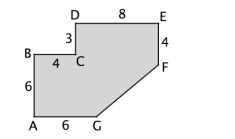
A área desse salão em m² é:
Em uma empresa com 40 funcionários, um funcionário é considerado novo quando está na empresa há menos de 5 anos e é considerado antigo quando está há 5 anos ou mais. Atualmente, há 14 funcionários novos na empresa, 18 funcionários com curso superior e 16 funcionários antigos que não possuem curso superior. O número de funcionários novos com curso superior é:
Cada um dos 160 funcionários da prefeitura de certo município
possui nível de escolaridade: fundamental, médio ou superior. O
quadro a seguir fornece algumas informações sobre a
quantidade de funcionários em cada nível:
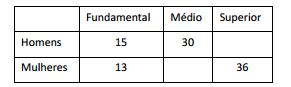
Sabe-se também que, desses funcionários, exatamente 64 têm
nível médio. Desses funcionários, o número de homens com
nível superior é:
Em setembro de 1988, foi promulgada determinada lei estadual que disciplinou certos aspectos relacionados à preservação do meio ambiente. Alguns setores representativos da doutrina e da jurisprudência consideraram que a lei, por destoar da Constituição promulgada em 5 de outubro de 1988, não fora por ela recepcionada. À luz da sistemática constitucional, a compatibilidade dessa lei com a Constituição vigente pode ser analisada, pelo Supremo Tribunal Federal, no exercício de sua competência originária, desde que observados os requisitos previstos na ordem jurídica, com:
Ricardo foi aprovado em concurso público e tomou posse no cargo de cientista de determinado ente da Administração Pública indireta. À luz da sistemática constitucional, é correto afirmar que ele, preenchidos os requisitos exigidos pela ordem jurídica:
A figura a seguir mostra um salão poligonal ABCDEF, onde os
ângulos internos nos vértices A, B, C, D e F são retos e as medidas
indicadas estão em metros.
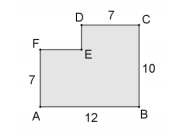
O perímetro e a área desse salão são, respectivamente: