
Complete la frase y elija la opción correcta.
I. “Ayer no __________ en el mismo restaurante.”
II. “Yo _________ trabajando aquí todos los días.”
El “voseo” en la lengua española puede ser considerado:
A brand name is a form of a signature that gives credit to the creator of a particular work or service and sets it apart from
those created by others. The main purpose of a brand name is to differentiate a particular product or service from other like
or similar brands.
- Chuck E. Cheese's.
- Coca-Cola.
- Donald Duck.
- Dunkin' Donuts.
- Krispy Kreme.
- Mickey Mouse.
- Peppa Pig.
- Peter Parker.
The wellknown brand names in the spotlight all hold:
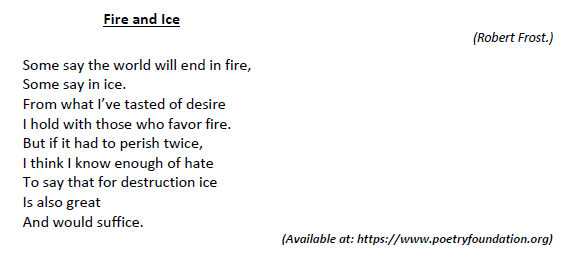
Assonance provides rhythm and musicality to change the mood of a text, also helping readers to reach its subject matter. Beyond literary use assonance is also found in pop culture as well as in everyday speech.
In “Fire and Ice” there are several instances of assonance, the same sort of sound effect found in:
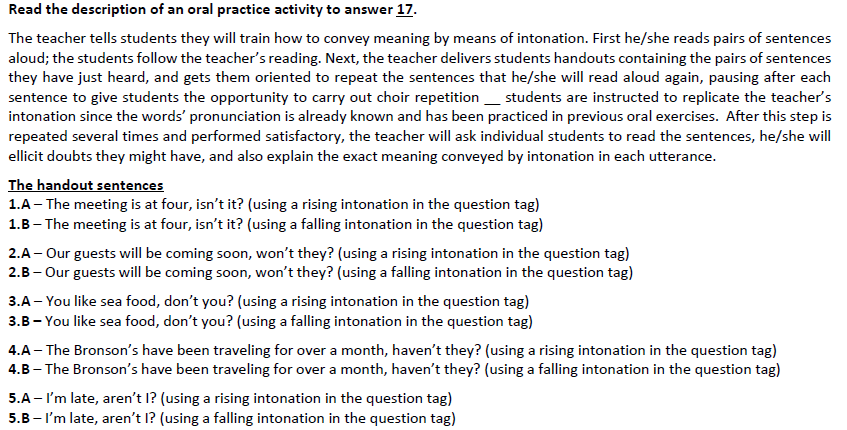
Mark the option which suits the meaning of the rising intonation practiced when uttering the question tags.

The use to which language is put, rather than the particular grammar form it takes, constructs language functions. Language is employed in order to fulfill purposes and each one of these purposes can be known as a language function.
Regarding the text above, which language function does it display?


NOTWITHSTANDING in the segment “Notwithstanding that women in Canada have fully enshrined right to this service, that doesn’t mean it’s widely available” establishes a/an:
Choose the answer which is compatible with analysis of the sentences that follow by ruling the correct ones.
I. In 1939, as in 1914, everybody seemed to want war.
II. He believed, like did all his family, that the king was their supreme lord.
III. Please don’t use that knife like a screwdriver.
IV. As your brother, I must warn you to be careful.
V. The meeting will be at 8:30 on Friday like on Tuesday.
VI. Like your father, I will ask you to stop seeing those people.
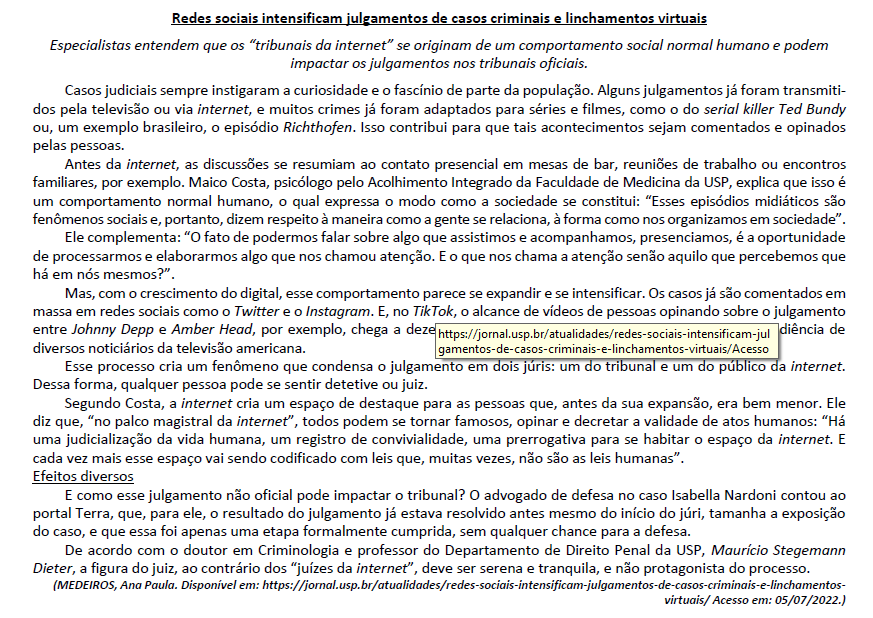
Assinale, a seguir, a afirmativa em que a palavra “que” desempenha a função de pronome relativo.
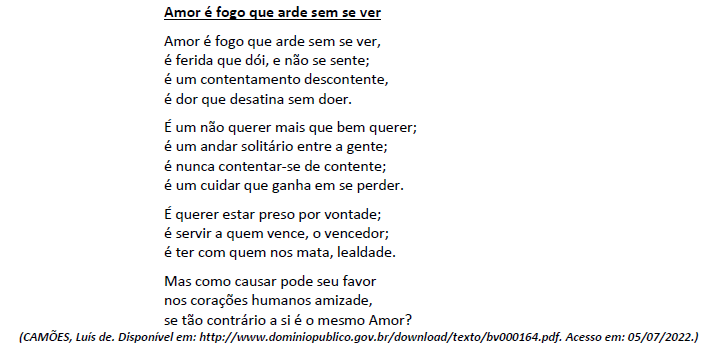
O elemento da comunicação que é destacado pela função fática é:
É correto afirmar que o discurso literário:

A expressão “baldo ao naipe” é um exemplo de que tipo de variação linguística?
A seguinte afirmação “[...] é, essencialmente, um sinal de notoriedade, de conhecimento prévio, por parte dos interlocutores, do ser mencionado” refere-se ao conceito de: