
Observe as imagens do centro de Belo Horizonte.
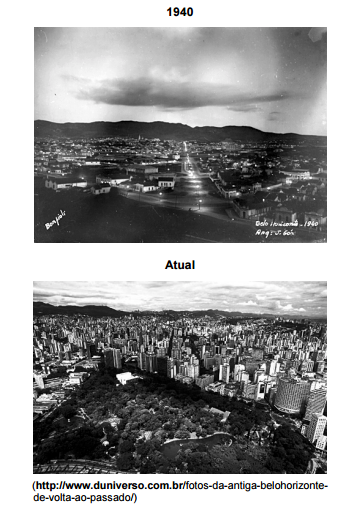
Trabalhando o tema da espacialidade com os alunos do Ensino Fundamental, o professor de Geografia poderia destacar, nas
fotos, o fenômeno da
Observe as imagens a seguir.
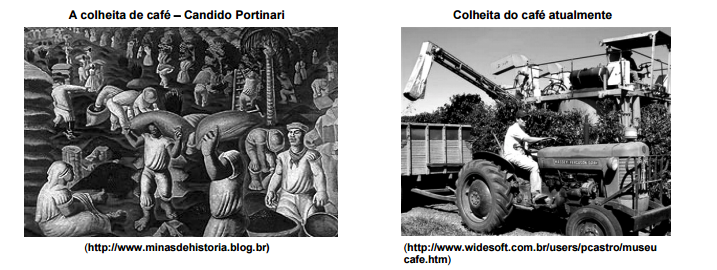
O professor de Geografia, trabalhando no Ensino Fundamental, pode utilizar–se das imagens para abordar o tema
Observe a imagem de uma cidade de Minas Gerais.
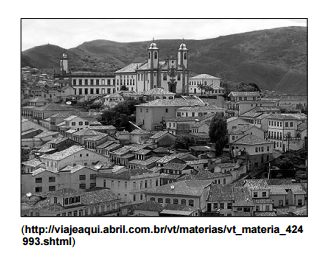
A paisagem urbana permite as seguintes relações histórico–geográficas:
Observe a imagem a seguir.
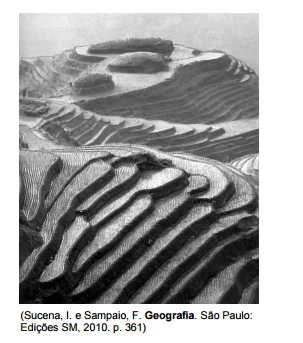
A imagem destaca uma paisagem agrícola característica
Observe as imagens.
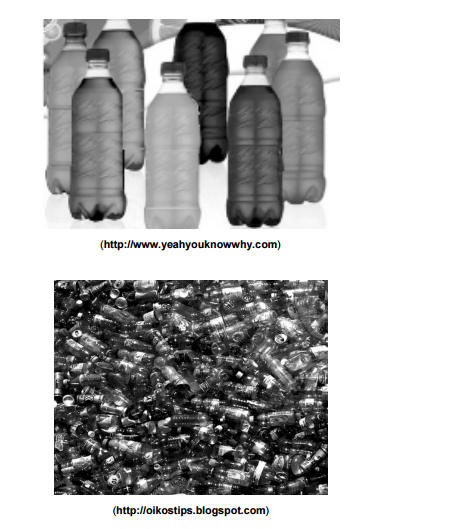
Com base nas imagens, o professor de Geografia pode abordar a relação entre
Observe o gráfico a seguir.
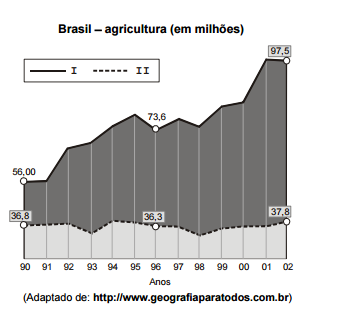
Com base nos conhecimentos sobre as transformações no campo brasileiro, está correto afirmar que as legendas I e II do
gráfico referem–se a
Leia o texto a seguir.
A EPAMIG − Empresa de Pesquisa Agropecuária de Minas Gerais foi constituída, como empresa pública, pela Lei nº
6.310, de 8
de maio de 1974 (Minas Gerais, 1999).
Constituiu–se na principal instituição de execução de pesquisa agropecuária de Minas
Gerais e tem a função de apresentar soluções para o complexo agrícola, gerando e adaptando alternativas tecnológicas,
oferecendo serviços especializados, capacitação técnica, insumos qualificados compatíveis com as necessidades dos clientes e
em benefício da qualidade de vida da sociedade.
(http://www.epamig.br)
O texto
Observe a charge a seguir.
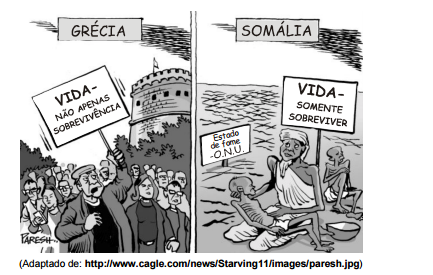
A partir da leitura da charge o professor de Geografia pode destacar que
Leia o texto abaixo.
Enfermo a 14 de novembro, na segunda–feira o velho Lima voltou ao trabalho, ignorando que no entretempo caíra o regime.
Sentou–se, e viu que tinham tirado da parede a velha litografia representando D. Pedro de Alcântara. Como na ocasião passasse
um contínuo, perguntou–lhe:
— Por que tiraram da parede o retrato de sua majestade?
O contínuo respondeu, num tom lentamente desdenhoso:
— Ora, cidadão, que fazia ali a figura do Pedro Banana?
— Pedro Banana! — repetiu raivoso o velho Lima.
E sentando–se, pensou com tristeza:
— Não dou três anos para que isto seja uma república!
(Arthur de Azevedo. Vidas Alheias (1901). In: Lilia Moritz Schwarcz. As barbas do imperador: D. Pedro II, um monarca nos trópicos.
São Paulo: Companhia das Letras, 1998. p. 470)
Este texto literário indica
A partir do texto, está correto afirmar que a Revolta da Vacina permanece, na história brasileira, como um exemplo de um movimento popular de êxito, baseado na defesa
Com base no texto, está correto afirmar que na Alemanha de Hitler o cinema
A utilização de representações esquemáticas permite ao professor de Biologia integrar conhecimentos e analisar com os alunos
fenômenos naturais envolvendo os seres vivos.
Considere o esquema:

De acordo com o esquema,
O cladograma abaixo refere-se à provável evolução das plantas.
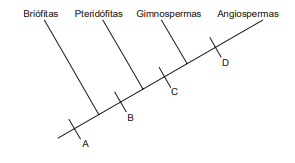
As letras A, B, C e D representam o surgimento de adaptações evolutivas importantes para a conquista do meio terrestre. A respeito da importância dessas adaptações, está correto afirmar que em
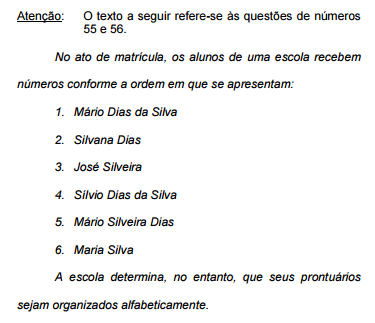
Se a base da organização for o último sobrenome, a
ordem correta dos prontuários será
Attention: Read the text and answer questions 21 to 29.
A Writer's Beginnings in Kenya By ALEXANDRA FULLER
ONE DAY I WILL WRITE ABOUT THIS PLACE
A Memoir By Binyavanga Wainaina 256 pp. Graywolf Press. $24.
Dear reader, I'll save you precious time: skip this review and head directly to the bookstore for Binyavanga Wainaina's stand-upand-cheer coming-of-age memoir, "One Day I Will Write About This Place." [CONNECTIVE] written by an East African and set in East and Southern Africa, Wainaina's book is not just for Afrophiles or lovers of post-colonial literature. This is a book for anyone who still finds the nourishment of a well-written tale preferable to the empty-calorie jolt of a celebrity confessional or Swedish mystery. Not that Wainaina is likely to judge [PRONOUN] taste in books. In fact, at its heart, this is a story about how Wainaina was almost [TO EAT] alive by his addiction to reading anything available. "I am starting to read storybooks," he says of his 11-year-old self, growing up in Nakuru, Kenya. "If words, in English, arranged on the page have the power to control my body in this world, this sound and language can close its folds, like a fan, and I will slide into its world, where things are arranged differently." As he leaves childhood [ADVERB 1] − "My nose sweats a lot these days, and my armpits smell, and I wake [ADVERB 2] a lot at night all wriggly and hot, like Congo rumba music" − Wainaina retreats further from the confusing realities of politics and adolescence and his big multinational family (his father a Kenyan businessman and farm owner, his mother a Ugandan salon owner) and deeper into a world of words. At school he is told, and believes, that he is supposed to become a doctor or a lawyer, an engineer or a scientist. But Wainaina seems constitutionally incapable of absorbing anything that would further a career in these fields. By the time Wainaina leaves Kenya to attend university in South Africa, a country smoldering with the last poisonous fumes of apartheid, his addiction to books is complete. He drops out of school to pursue more completely a life of reading.
Adapted from http://www.nytimes.com/2011/08/14/books/review/one-day-i-will-write-about-this-place-by-binyavanga-wainaina-book-review.html?pagewanted=all)
The word head, as used in the text, belongs to which of the following groups?