
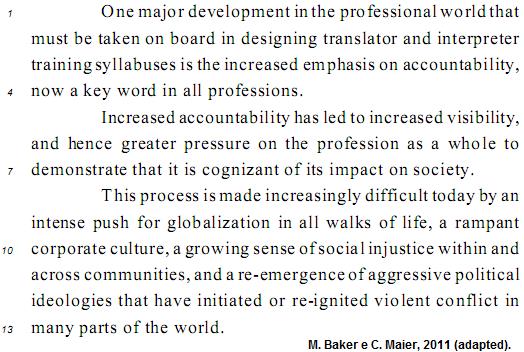
Based on the text above, judge the items below.
The fragment that must be taken on board (L.1-2) can be correctly translated as que deve influenciar.
Considering translation and some of the notions it envolves, judge
the following items.
Context can be defined as extra-textual features which determine the translation of a linguistic expression or a whole text.
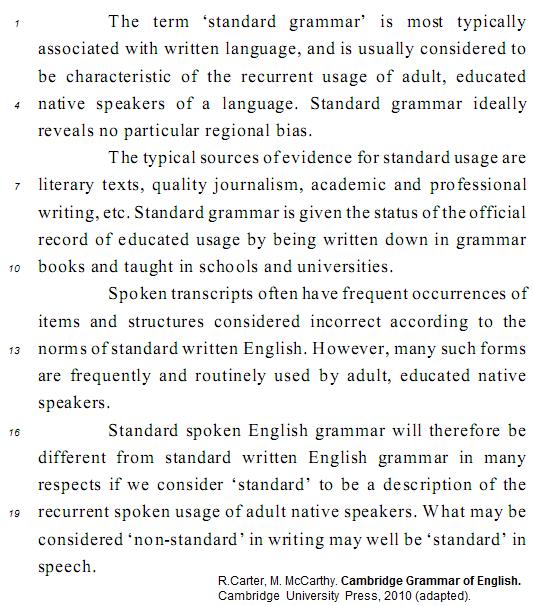
Each of the following items offers a suggestion for a translation into Portuguese of some excerpts of the text above. If the proposed translation is accurate and acceptable label the item C (certo). Otherwise, label it E (errado).
The typical sources of evidence for standard usage are literary texts, quality journalism, academic and professional writing, etc. (L.6-8) As fontes típicas que evidenciam o uso padrão são os textos literários, o jornalismo de qualidade, os escritos acadêmicos e profissionais etc.
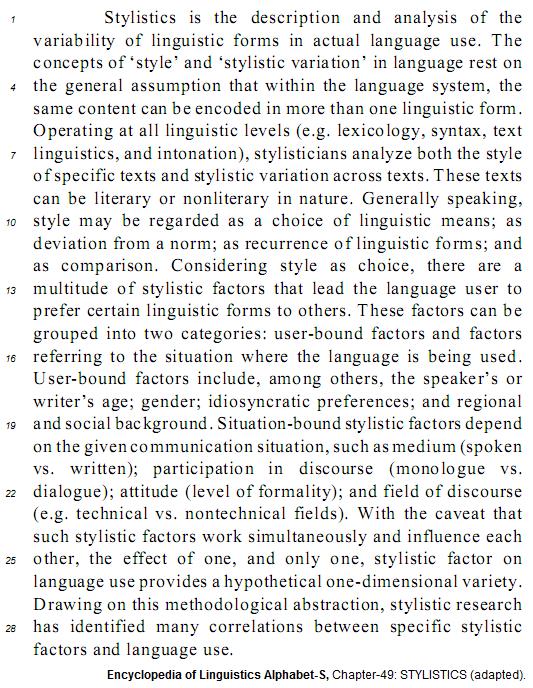
In the fragment
style may be regarded as a choice of linguistic means
(L.10),
regard means to consider or have an opinion about something or someone.
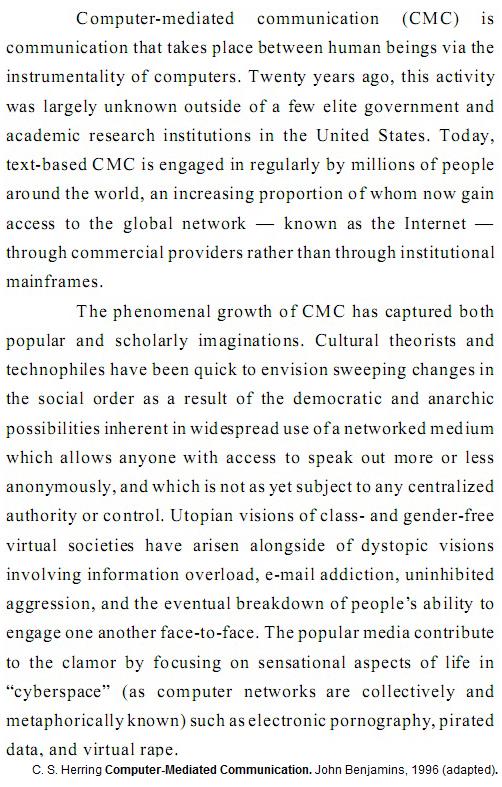
Based on the text above, judge the following items.
The media have been bringing about harmful effects to society.
Based on the text, judge the items from 111 to 120.
In the text, the expression to put forward (L.22) can be correctly replaced by define or establish.
Considering linguistics aspects of English, judge the following
items.
The following sentence presents a problem of meaning: Emotion is running high at the moment, but that emotion must not be allowed to temper sensible judgement.

Considering the SONY TV ad above, it is correct to state that
cutting edge (L.1) means different.
Considering the text and the topics to which it refers, judge theitems below.
The word assemble (L.9) is synonymous with gather or put together.
Juzgue los ítems siguientes de acuerdo con el texto de arriba.
El vocablo reclutar (L.14) es sustituible por alistar sin que se produzcan alteraciones semánticas o gramaticales en el texto.
Juzgue los ítems siguientes de acuerdo con el texto de arriba.
El vocablo tras (L.19) indica posterioridad temporal.
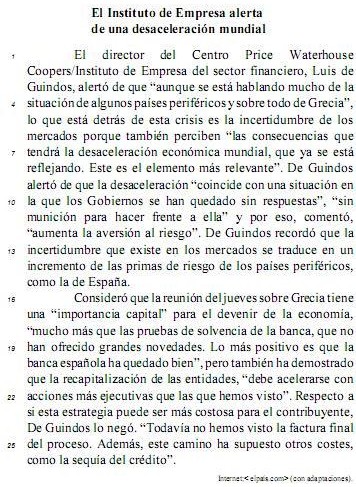
uzgue los ítems de 46 a 51 de acuerdo con el texto de arriba.
La forma verbal alerta (en el título) puede ser reemplazada por comenta sin que se produzcan alteraciones semánticas en el texto.

Juzgue los ítems siguientes fundamentándose en el texto de arriba.
La expresión haber lugar, usada en el texto en su forma subjuntiva haya lugar (L.5), es de uso exclusivamente jurídico.
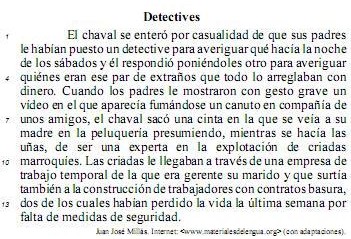
Juzgue los ítems siguientes de acuerdo con el texto de arriba.
La palabra canuto (L.6) es, con relación a su semántica y su registro, equivalente a la palabra porro y puede ser traducida al portugués por baseado.
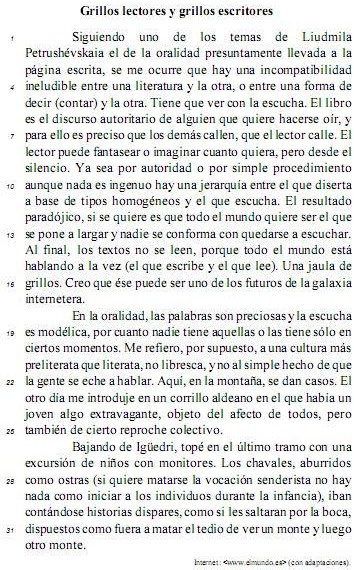
De acuerdo con el texto, es correcto traducir al portugués.
el que se pone a largar (L.12-13) por o que pretende ir embora.