Attention: Read the text and answer questions 34 to 40.
Our Plugged-in Summer
By BRUCE FEILER
I [TO SET OUT] to spend my summer vacation online. A few things conspired to give me the idea. The first was the insistent finger wagging one now encounters that the only way to spend quality time with one's children is to disengage from technology. The same day, my brother sent along a link for a new app (leafsnap) that allows users to identify trees by submitting photos of leaves. What a smart way to juice that nature walk, I thought. The next day I saw a Twitter message from Pierre Omidyar (@pierre), the eBay founder, in which he attached a photo and asked, "What is the name of this purple and white flower bush?" Seconds later he had his answer: lilac. Then my sister wrote to ask how she could identify the bird building a nest on her deck. "Take a picture and put it on Facebook," I said. "You'll have an answer within the hour." She bet me it wouldn't work, but within 19 minutes two friends had confirmed it was a Carolina wren. I concocted a scheme. During weekends this summer, I would pursue the opposite of an unplugged vacation: I would check screens whenever I could. Not in the service of work, but in the service of play. I would crowd-source new ideas for car games and YouTube my picnic recipes. I would test the prevailing wisdom that the Internet spoils all the fun. With back-to-school fast approaching, here's my report. For starters, the Web supplied an endless font of trivia and historical tidbits to enliven our days. I learned that a great debate still rages over who was the "Benedict" in eggs Benedict; that ancient mythologists believed fish were so afraid of the ospreys that they turned up their bellies in surrender; and that care packages like the one we sent my nephew at camp had their origins feeding starving Europeans in World War II. Online videos are another boon to summer. When my 6-year-old daughters were upset that we didn't awaken them at midnight to watch a brief light show on the Eiffel Tower, a quick trip to YouTube did the trick. My father used seaturtle.org to teach my girls how sea turtles emerge from the Atlantic near our home on Tybee Island, Ga., and lay eggs. Injured turtles are implanted with G.P.S. devices, allowing them to be tracked online. One surprising way that being plugged in improved our vacations was using newfangled resources to solve oldfangled problems. Bugs, for one. I used the Internet to find a home remedy for the slugs eating my begonias (broken eggshells). The Web also helped give us the feeling that we saw people more than we did. While it's fashionable to complain that we're overly connected, I still found an occasional, virtual interaction with a friend or family member to be as pleasant as running into them on the beach. I texted with my 12-year-old nephew about geocaching when we get together. My kids Skyped with my parents about learning to swim. And our devices were lifesavers when my daughter Tybee took a spill and had to be hurried to the hospital for stitches. A friend who took care of Tybee's twin, Eden, e-mailed us a photo of her noshing on pizza to assure us she was fine. When Tybee got nervous, the doctor asked her what movies she should download on her iPad for her son. And just before the procedure, I received a heartwarming text: "Dear Tybee, you are such a brave girl, love Eden."
(Adapted from http://www.nytimes.com/2011/08/14/fashion/this-lif...)
The correct form of [TO SET OUT] is
Attention: For questions 41-43, complete the dialogue with one of the options provided below:
James: 41 to South Africa?
Kate: Yes, I have. I 42 there about five years ago.
James: Oh, really? What 43 it like?
Kate: One of the most beautiful countries I've ever seen.
Attention: For questions 46-48, choose the suitable option to complete each sentence.
If we turned off home computers when not in use, we KK down their CO2 impact by 50 percent.
Attention: For questions 53-60, read the text below and decide which answer (A, B, C or D) best fits each gap.
Saving energy: it starts at home
We already know the fastest, 53 expensive way to slow climate change: use less energy. With a little effort, and not 54 money, most of us could reduce our energy diets by 25 percent or more − 55 the Earth a favor while also helping our pocketbooks. So what's holding us back? Scientists have reported recently that the world is heating up even faster 56 predicted only a few years 57 , and that the consequences could be severe if we don't 58 reducing emission of carbon dioxide and other greenhouse gases that are trapping heat in our atmosphere. But what can we 59 about it as individuals? Will our efforts really 60 any difference?
(Extracted from the National Geographic Magazine, March 2009)
Attention: For questions 53-60, read the text below and decide which answer (A, B, C or D) best fits each gap.
Saving energy: it starts at home
We already know the fastest, 53 expensive way to slow climate change: use less energy. With a little effort, and not 54 money, most of us could reduce our energy diets by 25 percent or more − 55 the Earth a favor while also helping our pocketbooks. So what's holding us back? Scientists have reported recently that the world is heating up even faster 56 predicted only a few years 57 , and that the consequences could be severe if we don't 58 reducing emission of carbon dioxide and other greenhouse gases that are trapping heat in our atmosphere. But what can we 59 about it as individuals? Will our efforts really 60 any difference?
(Extracted from the National Geographic Magazine, March 2009)
Attention: For questions 53-60, read the text below and decide which answer (A, B, C or D) best fits each gap.
Saving energy: it starts at home
We already know the fastest, 53 expensive way to slow climate change: use less energy. With a little effort, and not 54 money, most of us could reduce our energy diets by 25 percent or more − 55 the Earth a favor while also helping our pocketbooks. So what's holding us back? Scientists have reported recently that the world is heating up even faster 56 predicted only a few years 57 , and that the consequences could be severe if we don't 58 reducing emission of carbon dioxide and other greenhouse gases that are trapping heat in our atmosphere. But what can we 59 about it as individuals? Will our efforts really 60 any difference?
(Extracted from the National Geographic Magazine, March 2009)
Três tubos de ensaio (I, II e III) contêm, cada um, 10 mililitros de água destilada a 25 °C. A esses tubos, foram adicionadas
as seguintes massas de cloreto de sódio (NaCl):
Tubo I = 3,0 g Tubo II = 4,0 g Tubo III = 5,0 g
Sabendo-se que a solubilidade do NaCl a 25 °C é 36,0 g por 100 mL de água, após agitação, verificou-se existência de sólido e
solução saturada em alguns tubos. O valor da massa de NaCl (s ), em gramas, em cada um dos tubos I, II e III é,
respectivamente,
O nuclídeo formado após a emissão de uma partícula alfa por um nuclídeo de número atômico 92 e número de massa 238 possui número atômico
Um litro de solução de ácido perclórico, HClO4, de pH = 2,0, foi diluído com água até o dobro do volume inicial. O pH da nova solução
Considere um composto do tipo MX, onde M é um metal alcalino e X é um halogênio, pertencentes ao 2o
período da Tabela Periódica. Esse composto
Átomos de mesmo elemento que ganham estabilidade ao perder elétrons tendem a se unir entre si por ligação
Atenção: A tabela a seguir se refere às questões de números 49 a 51.
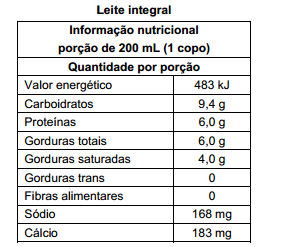
Dançar durante uma hora consome, para uma pessoa de 70 kg, 1 670 kJ de energia. Para recompor essa quantidade de
energia, seria necessário consumir um volume de leite integral, em mL, de, aproximadamente,
Segundo as Orientações Pedagógicas da Proposta Curricular do Estado de Minas Gerais, o ensino de Química deve utilizar experimentações como, por exemplo,
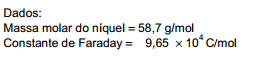
Utilizando uma corrente de 100 mA, a eletrodeposição de 1,0 g de níquel a partir de Ni2+ (aq), sobre uma bijuteria de aço inox
levaria o tempo, em minutos, de
Uma mala de massa 8,0 kg permanece em repouso quando liberada em um plano inclinado de ângulo θ com a horizontal.
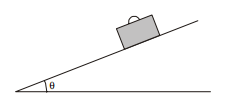
Adote sen θ = 0,60, cos θ = 0,80 e g = 10 m/s2. Nesse caso, a força de atrito que atua na mala tem módulo, em newtons, de