
A separação de misturas heterogêneas sólido-líquido e a trituração de sólidos são conseguidas corretamente com utilização de, respectivamente,
Para verificar as diferentes propriedades de condutibilidade elétrica dos materiais, um professor utilizou o seguinte sistema, em
soluções saturadas de água destilada + açúcar (I ); água destilada + sal de cozinha (II ); e água de torneira (III ):
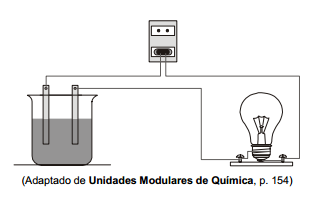
Devido aos íons presentes em cada situação, a condução de eletricidade das soluções, aumenta na seguinte ordem:
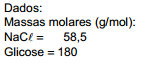
O soro fisiológico contém 0,90% de NaCl, em massa. Para preparar 1 L de solução com a mesma quantidade de glicose, em
mol, é necessária uma massa de glicose, em gramas, de, aproximadamente,
São formados por substâncias classificadas como orgânicas somente os seguintes componentes presentes nesse leite:
Quando o professor prepara um suco de frutas com seus alunos, partindo das instruções de preparo contidas na embalagem de um suco concentrado, motiva a classe na aprendizagem dos conceitos químicos de
Dois blocos A e B, cujas massas são mA = 3,0 kg e mB = 2,0 kg, respectivamente, estão em contato, sobre uma superfície
horizontal considerada sem atrito. Aplica-se ao bloco A uma força horizontal de módulo 15 N.
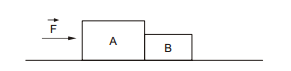
A força que um dos blocos exerce no outro tem intensidade, em newtons, de
Uma fogueira é acesa em uma noite fria para o aquecimento de pessoas. O principal processo de transferência do calor que ocorre neste caso é a
Atenção: Considere as informações abaixo para responder às questões de números 29 e 30. Um frasco de vidro, de capacidade térmica desprezível, contém 100 g de água à temperatura de 20 °C. Coloca-se no seu interior um pedaço de latão, de massa 200 g, à temperatura de 80 °C.
Dados: Calor específico da água = 1,0 cal/g °C
Calor específico do latão = 0,095 cal/g °C
A temperatura final de equilíbrio, supondo-se que não há troca de calor com o ambiente, é, em °C, de aproximadamente,
Tendo à disposição, em uma bancada de laboratório, uma bateria, fios de cobre, uma lâmpada e uma bússola, um professor pode comprovar
Nas Diretrizes Curriculares Nacionais para o Ensino Médio (1998), a Física está incluída no currículo da Base Nacional Comum
na área de
No ensino de Física, assim como no ensino de Ciências de forma geral, a disciplina deve ser apresentada aos alunos como uma construção humana
Segundo as Diretrizes Pedagógicas do Novo Plano Curricular, a avaliação deve ser vista como um
Sabe-se que a lei que fornece a temperatura T, em grau Celsius, de ebulição da água de acordo com a altitude h, em metros, é T = 100 - 0,0034h. Dessa forma, a altitude em que a temperatura de ebulição da água é 72,8 °C é de
Instruções: Texto para as questões de números 29 a 31.
Existe uma história, talvez apócrifa, do ilustre biólogo britânico J. B. S. Haldane, quando se encontrava na companhia de um grupo de teólogos. Ao ser perguntado o que se poderia concluir da natureza do Criador pelo estudo de sua criação, Haldane teria respondido: "Uma predileção desmesurada por besouros."
(G. Evelyn Hutchinson, citado por Stephen Jay Gould, Dinossauro no palheiro, S.Paulo, Cia. das Letras, 1997, p.453) Atenção: Para responder à questão de número 29, considere também o texto anterior.
Da leitura conjunta dos textos é possível fazer a seguinte inferência:
Num país sem tradições, é compreensível que se tenha desenvolvido a ânsia de ter raízes, de aprofundar no passado a própria realidade, a fim de demonstrar a mesma dignidade histórica dos velhos países. Nesse afã, os românticos compuseram uma literatura para o passado brasileiro, estabelecendo troncos a que se pudesse filiar (...) (Antonio Candido) No trecho crítico acima, há elementos que ajudam a compreender
Um corpo é lançado verticalmente para baixo, de uma altura de 60 m em relação ao solo, com velocidade inicial de 8 m/s.
Desprezando a resistência do ar, a altura do corpo, em relação ao solo, 2s após o lançamento, em metros, vale
Dado:
g = 10 m/s2
Em uma sala quadrada ABCD foi instalado um espelho plano vertical de forma que cada uma de suas laterais tocam as metades
das paredes AB e AD. Um observador O encontra–se no meio da parede BC, conforme mostra a figura.
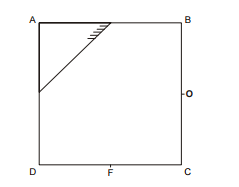
Dentre os pontos B, C, D e F da figura, o observador O pode enxergar por reflexão no espelho
Dois resistores ôhmicos R1 e R2 podem ser associados em série ou em paralelo. Quando associados em série e ligados a uma fonte de tensão V, o resistor R2 dissipa uma potência duas vezes maior que R1. Se forem associados em paralelo e ligados à mesma tensão, a potência dissipada por R1 em relação à dissipada por R2 é
Tendo à disposição, em uma bancada de laboratório, uma bateria, fios de cobre, uma lâmpada e uma bússola, um professor pode comprovar
Segundo as Diretrizes Pedagógicas do Novo Plano Curricular, a avaliação deve ser vista como um
Ao trabalhar o tema "motor e gerador elétrico", o professor de Física deve considerar, entre outros aspectos, que esse tema
Observe a charge.
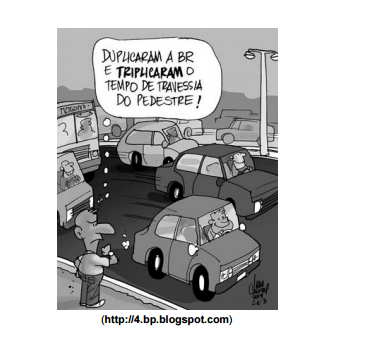
Com base no conteúdo da charge, o professor de Geografia do Ensino Fundamental pode iniciar o tema das redes de
circulação, discutindo
Observe a imagem a seguir.
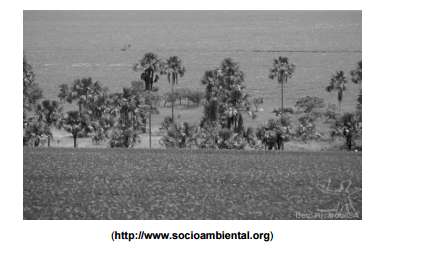
Parece uma bela paisagem agrícola, não fosse o fato de estar situada no Parque Nacional Grande Sertão Veredas, que foi
criado, justamente, para a proteção de áreas de Cerrado em Minas Gerais. As áreas de Cerrado em Minas Gerais sofrem muitos
problemas ambientais, como
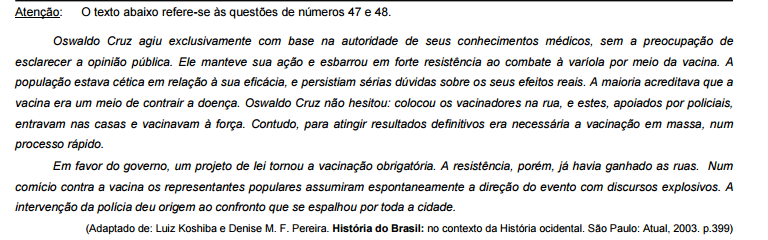
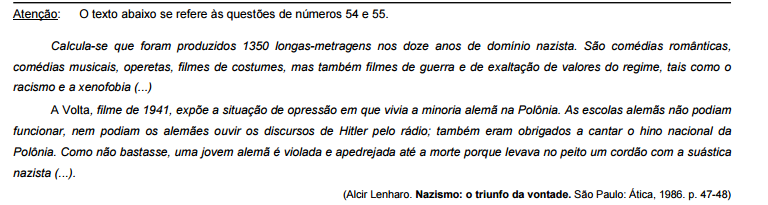
Considerando o contexto da Segunda Guerra Mundial e o avanço dos exércitos alemães na Europa, é correto afirmar que a situação apresentada no filme A Volta
Analise a tabela abaixo.
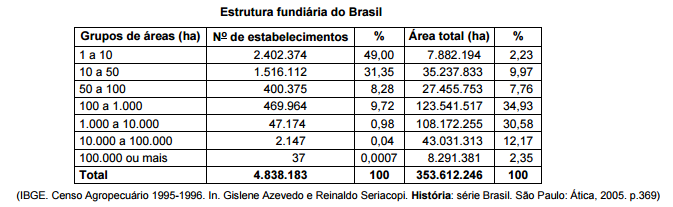
O desequilíbrio na distribuição de terras demonstrado na tabela pode ser apontado como um dos responsáveis pela
Attention: Read the text and answer questions 21 to 29.
A Writer's Beginnings in Kenya By ALEXANDRA FULLER
ONE DAY I WILL WRITE ABOUT THIS PLACE
A Memoir By Binyavanga Wainaina 256 pp. Graywolf Press. $24.
Dear reader, I'll save you precious time: skip this review and head directly to the bookstore for Binyavanga Wainaina's stand-upand-cheer coming-of-age memoir, "One Day I Will Write About This Place." [CONNECTIVE] written by an East African and set in East and Southern Africa, Wainaina's book is not just for Afrophiles or lovers of post-colonial literature. This is a book for anyone who still finds the nourishment of a well-written tale preferable to the empty-calorie jolt of a celebrity confessional or Swedish mystery. Not that Wainaina is likely to judge [PRONOUN] taste in books. In fact, at its heart, this is a story about how Wainaina was almost [TO EAT] alive by his addiction to reading anything available. "I am starting to read storybooks," he says of his 11-year-old self, growing up in Nakuru, Kenya. "If words, in English, arranged on the page have the power to control my body in this world, this sound and language can close its folds, like a fan, and I will slide into its world, where things are arranged differently." As he leaves childhood [ADVERB 1] − "My nose sweats a lot these days, and my armpits smell, and I wake [ADVERB 2] a lot at night all wriggly and hot, like Congo rumba music" − Wainaina retreats further from the confusing realities of politics and adolescence and his big multinational family (his father a Kenyan businessman and farm owner, his mother a Ugandan salon owner) and deeper into a world of words. At school he is told, and believes, that he is supposed to become a doctor or a lawyer, an engineer or a scientist. But Wainaina seems constitutionally incapable of absorbing anything that would further a career in these fields. By the time Wainaina leaves Kenya to attend university in South Africa, a country smoldering with the last poisonous fumes of apartheid, his addiction to books is complete. He drops out of school to pursue more completely a life of reading.
Adapted from http://www.nytimes.com/2011/08/14/books/review/one-day-i-will-write-about-this-place-by-binyavanga-wainaina-book-review.html?pagewanted=all)
The missing [CONNECTIVE] is
Attention: Read the text and answer questions 21 to 29.
A Writer's Beginnings in Kenya By ALEXANDRA FULLER
ONE DAY I WILL WRITE ABOUT THIS PLACE
A Memoir By Binyavanga Wainaina 256 pp. Graywolf Press. $24.
Dear reader, I'll save you precious time: skip this review and head directly to the bookstore for Binyavanga Wainaina's stand-upand-cheer coming-of-age memoir, "One Day I Will Write About This Place." [CONNECTIVE] written by an East African and set in East and Southern Africa, Wainaina's book is not just for Afrophiles or lovers of post-colonial literature. This is a book for anyone who still finds the nourishment of a well-written tale preferable to the empty-calorie jolt of a celebrity confessional or Swedish mystery. Not that Wainaina is likely to judge [PRONOUN] taste in books. In fact, at its heart, this is a story about how Wainaina was almost [TO EAT] alive by his addiction to reading anything available. "I am starting to read storybooks," he says of his 11-year-old self, growing up in Nakuru, Kenya. "If words, in English, arranged on the page have the power to control my body in this world, this sound and language can close its folds, like a fan, and I will slide into its world, where things are arranged differently." As he leaves childhood [ADVERB 1] − "My nose sweats a lot these days, and my armpits smell, and I wake [ADVERB 2] a lot at night all wriggly and hot, like Congo rumba music" − Wainaina retreats further from the confusing realities of politics and adolescence and his big multinational family (his father a Kenyan businessman and farm owner, his mother a Ugandan salon owner) and deeper into a world of words. At school he is told, and believes, that he is supposed to become a doctor or a lawyer, an engineer or a scientist. But Wainaina seems constitutionally incapable of absorbing anything that would further a career in these fields. By the time Wainaina leaves Kenya to attend university in South Africa, a country smoldering with the last poisonous fumes of apartheid, his addiction to books is complete. He drops out of school to pursue more completely a life of reading.
Adapted from http://www.nytimes.com/2011/08/14/books/review/one-day-i-will-write-about-this-place-by-binyavanga-wainaina-book-review.html?pagewanted=all)
The correct form of [TO EAT] in the above text is
Attention: Read the text and answer questions 21 to 29.
A Writer's Beginnings in Kenya By ALEXANDRA FULLER
ONE DAY I WILL WRITE ABOUT THIS PLACE
A Memoir By Binyavanga Wainaina 256 pp. Graywolf Press. $24.
Dear reader, I'll save you precious time: skip this review and head directly to the bookstore for Binyavanga Wainaina's stand-upand-cheer coming-of-age memoir, "One Day I Will Write About This Place." [CONNECTIVE] written by an East African and set in East and Southern Africa, Wainaina's book is not just for Afrophiles or lovers of post-colonial literature. This is a book for anyone who still finds the nourishment of a well-written tale preferable to the empty-calorie jolt of a celebrity confessional or Swedish mystery. Not that Wainaina is likely to judge [PRONOUN] taste in books. In fact, at its heart, this is a story about how Wainaina was almost [TO EAT] alive by his addiction to reading anything available. "I am starting to read storybooks," he says of his 11-year-old self, growing up in Nakuru, Kenya. "If words, in English, arranged on the page have the power to control my body in this world, this sound and language can close its folds, like a fan, and I will slide into its world, where things are arranged differently." As he leaves childhood [ADVERB 1] − "My nose sweats a lot these days, and my armpits smell, and I wake [ADVERB 2] a lot at night all wriggly and hot, like Congo rumba music" − Wainaina retreats further from the confusing realities of politics and adolescence and his big multinational family (his father a Kenyan businessman and farm owner, his mother a Ugandan salon owner) and deeper into a world of words. At school he is told, and believes, that he is supposed to become a doctor or a lawyer, an engineer or a scientist. But Wainaina seems constitutionally incapable of absorbing anything that would further a career in these fields. By the time Wainaina leaves Kenya to attend university in South Africa, a country smoldering with the last poisonous fumes of apartheid, his addiction to books is complete. He drops out of school to pursue more completely a life of reading.
Adapted from http://www.nytimes.com/2011/08/14/books/review/one-day-i-will-write-about-this-place-by-binyavanga-wainaina-book-review.html?pagewanted=all)
De acordo com o texto,
Attention: For questions 41-43, complete the dialogue with one of the options provided below: James: KK 41 to South Africa? Kate: Yes, I have. I KK 42 there about five years ago. James: Oh, really? What KK 43 it like? Kate: One of the most beautiful countries I’ve ever seen